

GLP-1 MedicationsHealthy LivingWeight Loss
Does Ozempic Cause Muscle Loss?
Clinical trials show that while semaglutide primarily drives fat loss, some lean mass can decline during treatment. Here’s what that really means — and how to protect your metabolism and muscle while losing weight.
Short answer: Yes — Ozempic (semaglutide) can lead to some lean mass loss during weight reduction.
Long answer: It’s more nuanced — and far more manageable — than most headlines suggest.
At JumpstartMD, we believe GLP-1 treatment should focus on fat loss with muscle protection. Because the scale going down is good. But losing strength and metabolism along with it? Not so much.
Let’s break down what the science really says.
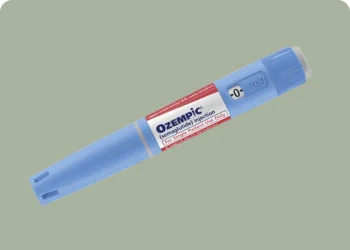
Ozempic and Wegovy: Same Medication, Different Goals
Ozempic and Wegovy are both semaglutide.
- Ozempic is FDA-approved for type 2 diabetes (up to 2 mg weekly).
- Wegovy is approved for chronic weight management (2.4 mg weekly).
Most body composition data comes from Wegovy-dose clinical trials (the STEP studies), since those focused on obesity treatment.
The mechanism is the same in both: appetite suppression → calorie reduction → weight loss.
And whenever significant weight loss occurs – whether from medication, surgery, or diet — some lean mass is typically lost alongside fat.
What Does “Lean Mass” Actually Mean?
This is where confusion starts.
In clinical trials, body composition is measured using DXA scans. On DXA:
Lean mass includes:
- Skeletal muscle
- Organs
- Body water
- Glycogen (stored carbohydrate + fluid)
It does not equal pure muscle.
So when you see headlines like:
“40% of weight lost was lean mass”
That doesn’t mean 40% was muscle.
Some of that reduction reflects:
- Water shifts
- Glycogen depletion
- Organ fat reduction (especially in the liver)
Important distinction.
What the STEP Trials Show About Muscle Loss on Ozempic
In the STEP 1 trial:
Participants lost about 15% of total body weight over 68 weeks.
DXA analysis showed:
- Fat mass decreased by ~19%
- Lean mass decreased by ~9–10%
- Visceral fat declined significantly
When translated proportionally, roughly 35–40% of total weight lost was categorized as lean mass.
But because fat mass declined more than lean mass, the percentage of lean body mass relative to total body weight improved.
In other words:
Patients ended up lighter, with less fat, and a better overall body composition — even though some lean mass decreased in absolute terms.
That said — 5 to 8 pounds of lean mass loss in a typical patient is clinically meaningful.
And that’s where supervision matters.
Does Ozempic Cause Real Muscle Loss?
It can.
Semaglutide does not directly break down muscle. But during a calorie deficit, if:
- Protein intake is too low
- Resistance training is absent
- Weight loss is rapid
Your body may use muscle tissue for energy alongside fat.
Recent research also shows strength can decline even when muscle mass appears stable on scans — meaning functional changes can precede measurable ones.
That’s why monitoring strength and body composition together matters.
Who Is Most at Risk of Muscle Loss on Ozempic?
Muscle preservation becomes more important in:
- Adults over 60
- Post-menopausal women
- Individuals losing weight rapidly
- Patients with low protein intake
- Sedentary individuals
- People with type 2 diabetes
But here’s the key:
You don’t need to be “high risk” to protect your muscle.
You just need a plan.
How to Prevent Muscle Loss on Ozempic
At JumpstartMD, we build muscle protection into every GLP-1 protocol.
1. Prioritize Protein
Aim for approximately 0.7–0.8 grams of protein per pound of body weight daily, distributed across meals.
Because Ozempic reduces appetite, protein must be intentional — eat it first.
2. Resistance Training (At Least Twice Weekly)
Progressive strength training provides the stimulus your body needs to preserve muscle during fat loss.
Without it, your metabolism adapts downward more aggressively.
3. Track Body Composition — Not Just Weight
This is where many programs fall short.
The scale cannot tell you:
- If you’re losing fat or muscle
- If visceral fat is improving
- If muscle loss is disproportionate
At JumpstartMD, we use medical-grade InBody® body composition analysis at baseline and follow-up visits.
We track:
- Skeletal muscle mass
- Percent body fat
- Visceral fat
- Basal metabolic rate
- Segmental lean distribution
If lean mass drops disproportionately, we adjust:
- Protein targets
- Medication titration
- Exercise protocols
- Coaching strategy
That’s clinician-supervised weight loss.
Not guesswork.
What Happens When Ozempic Stops?
Real-world data shows many patients discontinue GLP-1 medications within 12 months due to cost, side effects, or access.
When medication stops:
- Appetite often returns
- Weight regain can occur
- Fat mass may return faster than lean mass
Muscle protection during treatment helps buffer this transition.
That’s why building sustainable habits while on medication is critical.
Lose Fat. Keep Strength.
Does Ozempic cause muscle loss?
It can contribute to lean mass reduction — but primarily drives fat loss.
The difference between losing weight well and losing weight poorly isn’t the medication.
It’s the monitoring.
It’s the protein.
It’s the resistance training.
It’s the medical supervision.
We Got You, California.
If you’re on Ozempic — or considering it — enjoy a free consultation with a compassionate JumpstartMD Program Consultant and learn how medically supervised GLP-1 treatment protects your muscle and your metabolism from day one.
Call JumpstartMD today at 650.487.1755 to start your journey to feeling and looking your best.
Prescription required. Eligibility determined by licensed clinician. Results vary.